
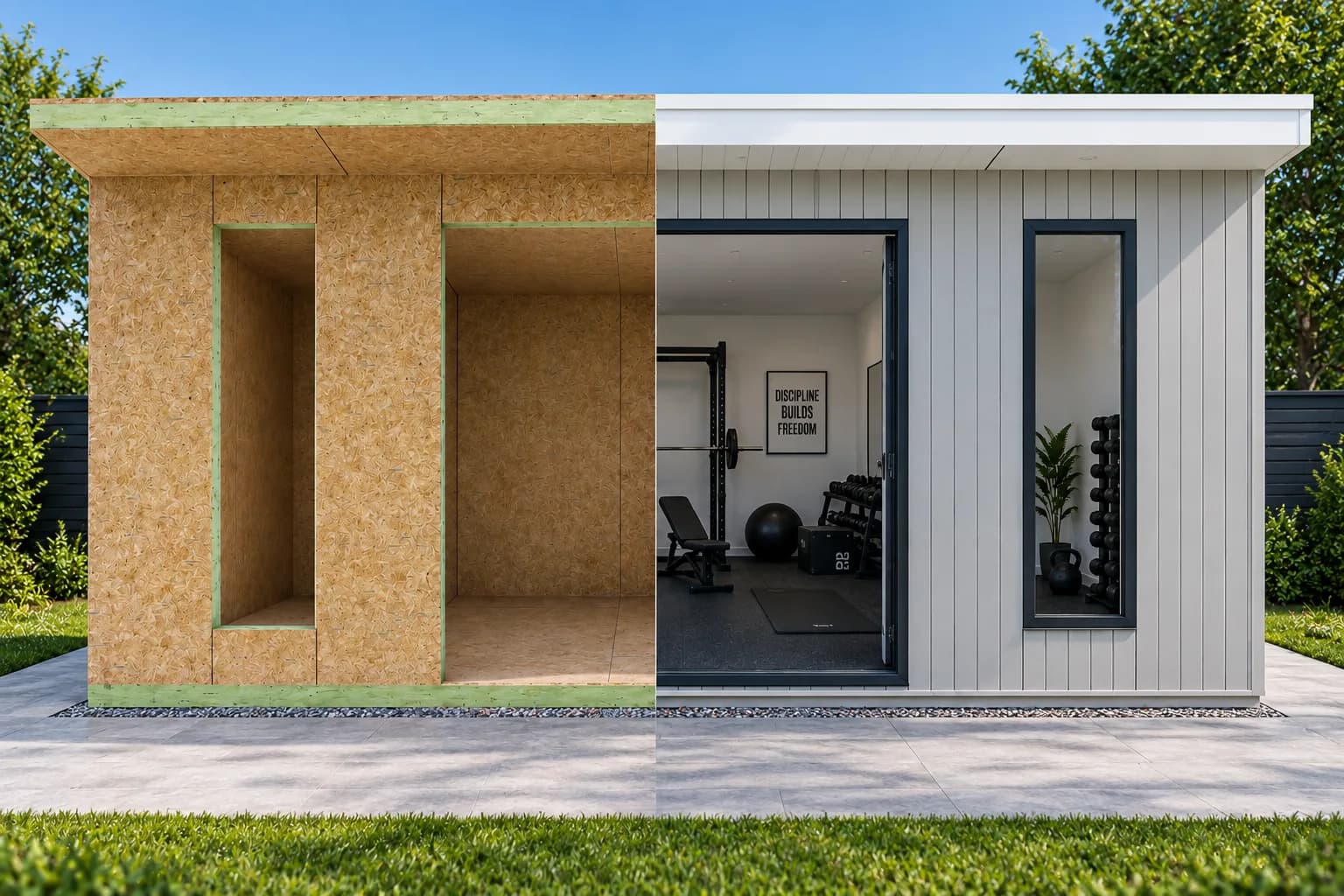
Whether you plan to use a garden room as an office, a gym or a studio, you will want it to be comfortable in January as well as in July. Insulation is one of the main reasons people choose SIP panels for garden rooms and other small buildings in the UK. This guide explains, in plain terms, how SIP panels behave when it is cold or hot outside, and what else affects the temperature inside a finished SIP garden room.
In short:
- SIP panels help reduce heat transfer between the inside and the outside of a building, in both cold and hot weather.
- They do not heat or cool a room on their own: heating is still needed in winter, and shading and ventilation matter in summer.
- The final internal temperature depends on the complete building: design, installation, glazing, ventilation and heating.
Can SIP Buildings Be Comfortable Throughout the Year?
Insulation is one of the most important characteristics of SIP construction. Heat naturally moves from warmer areas to cooler ones, and much of that movement happens through the walls, floor and roof of a building. SIP panels help reduce heat transfer between the inside and the outside.
Importantly, insulation works in both directions. In cold weather it helps slow the loss of heat from inside the room; in warm weather it helps slow the heat coming in from outside. That is why a properly designed SIP garden room can be a comfortable space to use throughout the year.
How Does a SIP Panel Work?
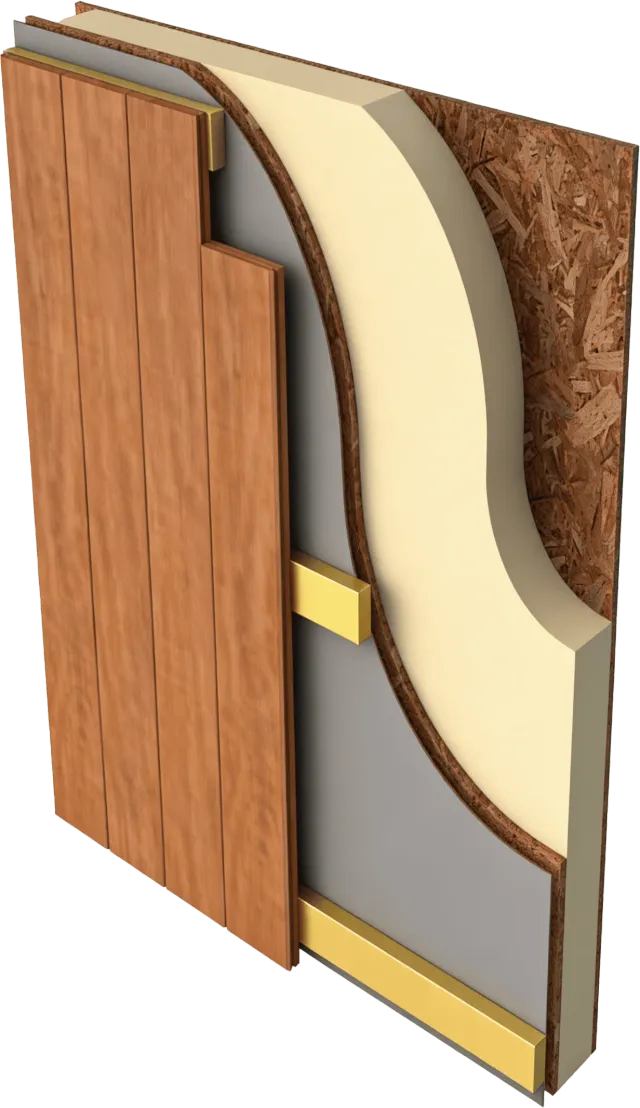
A structural insulated panel (SIP) is made from three layers:
- OSB3 structural boards on both faces: strong engineered timber boards that give the panel its rigidity.
- An EPS insulation core (expanded polystyrene) in the middle.
- Bonded together under factory conditions, so the finished panel works as a single structural, insulated element.
EPS is made up of many small closed cells that trap air, which makes it a poor conductor of heat. In practical terms, the EPS core reduces the rate at which heat travels through the building envelope (the walls, floor and roof that separate the inside of the building from the outside). It does not stop heat moving altogether, as no insulation does, but it slows it down.
What Happens When It Is Cold Outside?
So how do SIP panels perform in winter? When the temperature outside drops, the air inside a heated garden room is warmer than the air outside, and heat tries to escape through the walls, floor and roof. The SIP panel insulation helps slow that heat escaping from the internal space.
This can make it easier to maintain a comfortable internal temperature when appropriate heating is used, because less of the heat you put in is lost through the structure. SIP panels do not generate heat themselves, so a garden room used in winter still needs a suitable heating source.
The overall performance of the finished garden room will also depend on:
- Windows and doors
- Panel joints
- Airtightness
- Floor and roof construction
- Ventilation
- Heating
- Overall building design
What Happens When It Is Hot Outside?
Insulation also works in the opposite direction, which is how SIP panels help in summer. On a hot day the outside air and the sun warm the outer surfaces of the building, and the insulated panels help slow heat transfer from outside into the internal space.
However, insulation alone does not guarantee that a room will always remain cool. The internal temperature can also be affected by:
- Direct sunlight
- The amount and size of glazing
- Window orientation
- Ventilation
- External shading
- Internal heat sources, such as computers, gym equipment, lighting and people
Large south- or west-facing windows, for example, can let in a lot of heat from the sun. Roof overhangs, blinds, external shading and good ventilation all help keep an insulated garden room comfortable on warm days.
Why the Complete SIP Shell Matters
Good thermal performance is not only about the walls. Heat can move through every part of the building envelope, so using insulated panels throughout the building can help reduce heat transfer through the:
- Walls
- Floor
- Roof
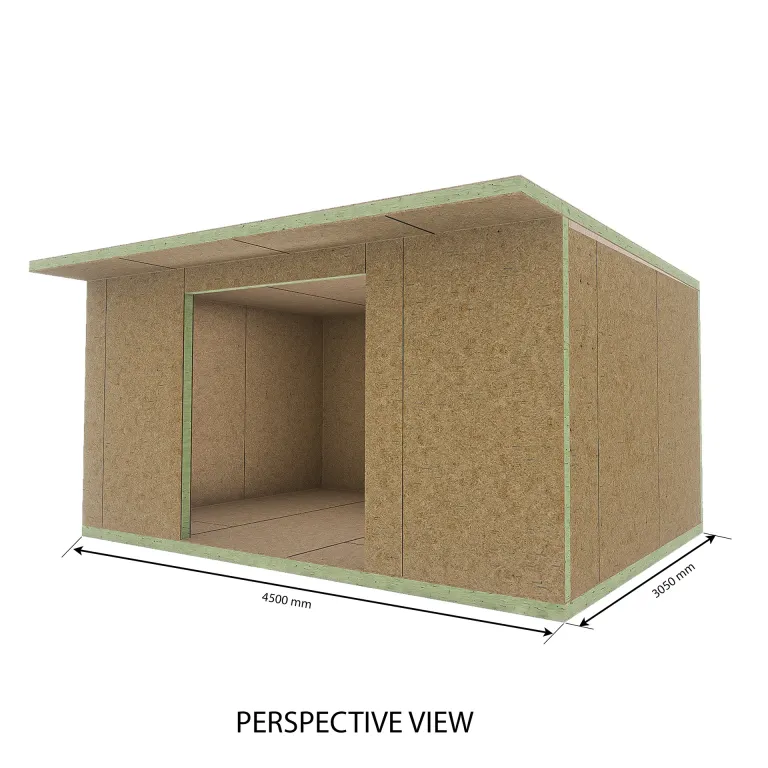
Correctly connecting these elements creates a more continuous insulated envelope around the internal space, with fewer weak points where heat can bypass the insulation. This is why IRSIP garden room shell kits include SIP panels for the walls, the floor and the roof/ceiling as standard.
SIP Panel Thicknesses Available from IRSIP
IRSIP manufactures SIP panels in different thicknesses for different project requirements. Our current range, as shown on our SIP Panels page, includes:
- Standard SIP panels with 11 mm OSB facings: 97 mm to 222 mm overall thickness
- Heavy-duty structural SIP panels with 15 mm OSB facings: 105 mm to 230 mm overall thickness
Both ranges are made with insulation cores from 75 mm to 200 mm, in 2.4 m and 3 m lengths. The full specification of each panel, including its U-value (a measure of how readily heat passes through it), is listed on our SIP Panels page.
The right specification for a project depends on how the building will be used and on any technical or Building Regulations requirements that apply, so please talk to us about your project before choosing a panel.
Why Panel Joints and Airtightness Matter
The insulation inside the panel is only part of the overall thermal performance. The panels must also be correctly connected and the joints between them properly sealed.
Poorly sealed gaps can allow unwanted air movement, letting warm air escape in winter and warm air in during summer, and reduce the thermal performance of the finished structure. IRSIP shell kits include OSB connection splines, expanding PU foam and all the screws and fixings needed to join the panels, and careful assembly on site matters just as much.
Windows and Doors Also Matter
Even a well-insulated SIP shell is only one part of the completed building. Glazing generally lets more heat through than an insulated wall, so the windows and doors you choose, and how well they are fitted and sealed, can significantly affect internal temperatures in both winter and summer.
Ventilation is also important, particularly during warmer weather. Opening windows, trickle vents or mechanical ventilation help remove excess heat and moisture and keep the air fresh.
Are SIP Panels Suitable for Year-Round Garden Rooms?
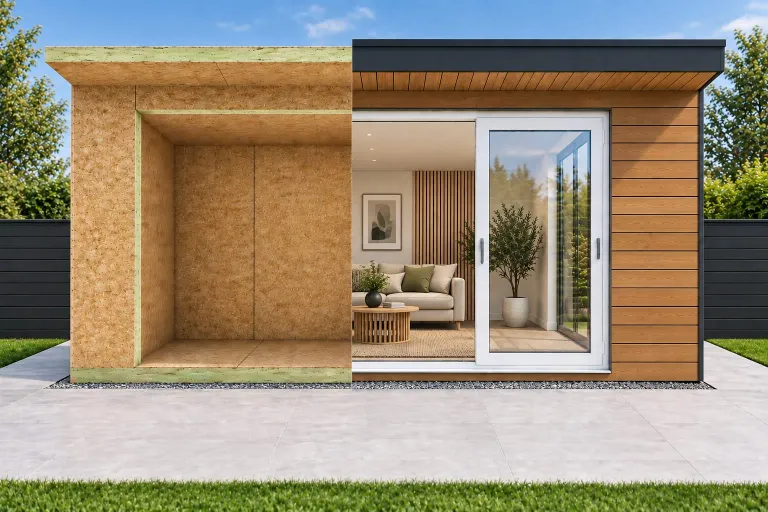
SIP construction can provide an insulated building envelope suitable for creating comfortable garden spaces throughout the year, when the complete building is properly designed, constructed, ventilated and heated where necessary. Good SIP panel thermal performance is the starting point; the rest of the building completes it.
Examples of possible uses include:
- Garden office
- Gym
- Workshop
- Hobby room
- Studio
- Games room
- Entertainment room
For more ideas, see our guide What Can You Use a SIP Garden Room For?