
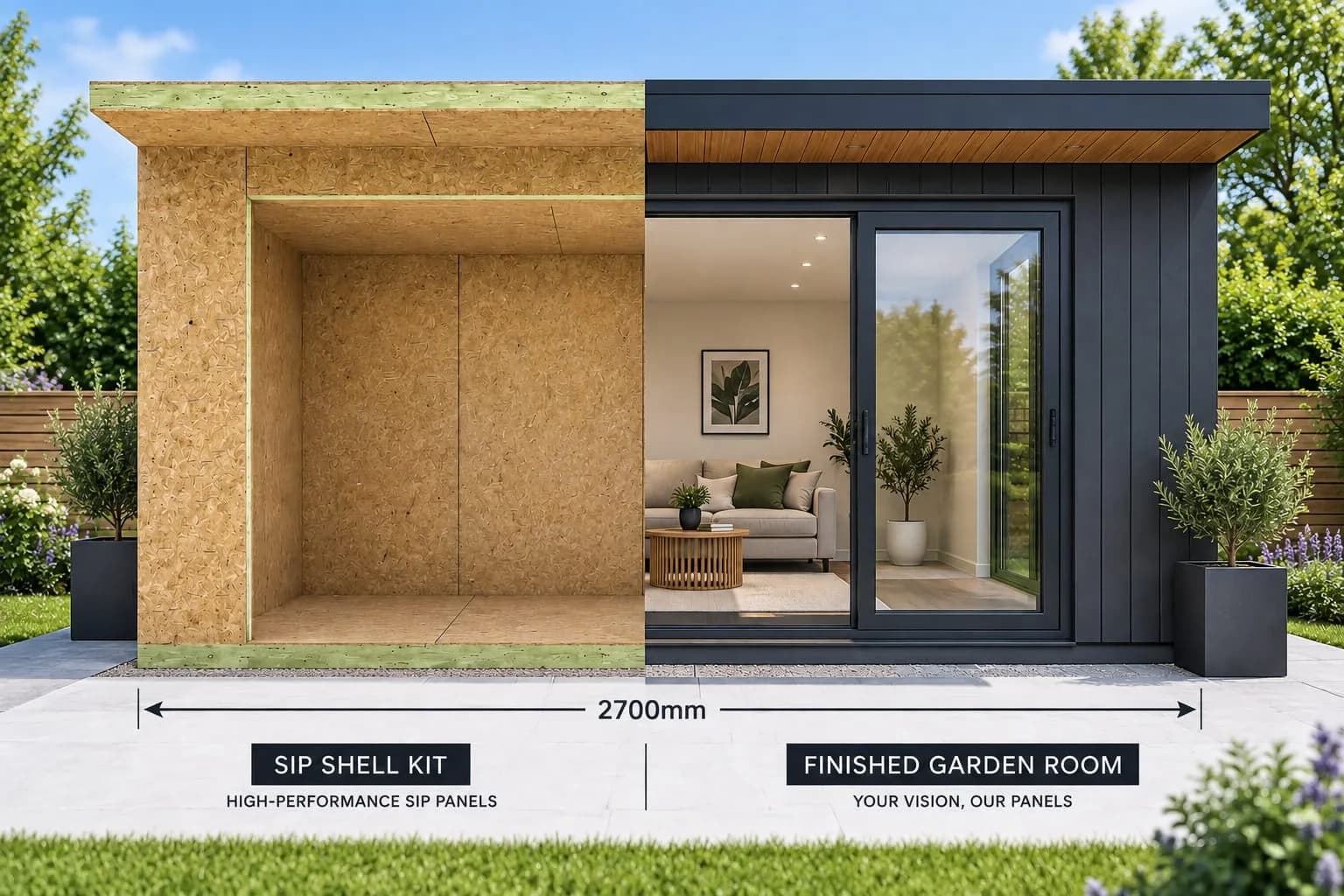
A garden room is no longer just a garden office. With a SIP (structural insulated panel) shell, you get a solid, well-insulated building that can be finished to suit almost any purpose — from a home gym or garden bar to a golf simulator or a children’s playroom.
At IRSIP we manufacture SIP garden room shell kits in Leicester. The shell kit is our main product: we supply the structure, and you choose the finishes that turn it into the room you need. Below are 14 popular ways to use a SIP garden room, with practical tips to help you plan yours.
Why a SIP Shell Kit Suits So Many Different Uses
Every use in this article starts from the same thing: a precision-made SIP shell. Here is what that gives you.
- Manufactured in Leicester — every shell kit is made in our own Leicester facility, with factory-numbered panels for quick and accurate assembly.
- 97 mm SIP panels as standard for the walls, floor and roof/ceiling: 11 mm OSB3 (BBA approved) + 75 mm EPS insulation + 11 mm OSB3 (BBA approved).
- Thicker SIP panel options are available (for example 122 mm) if you want extra insulation.
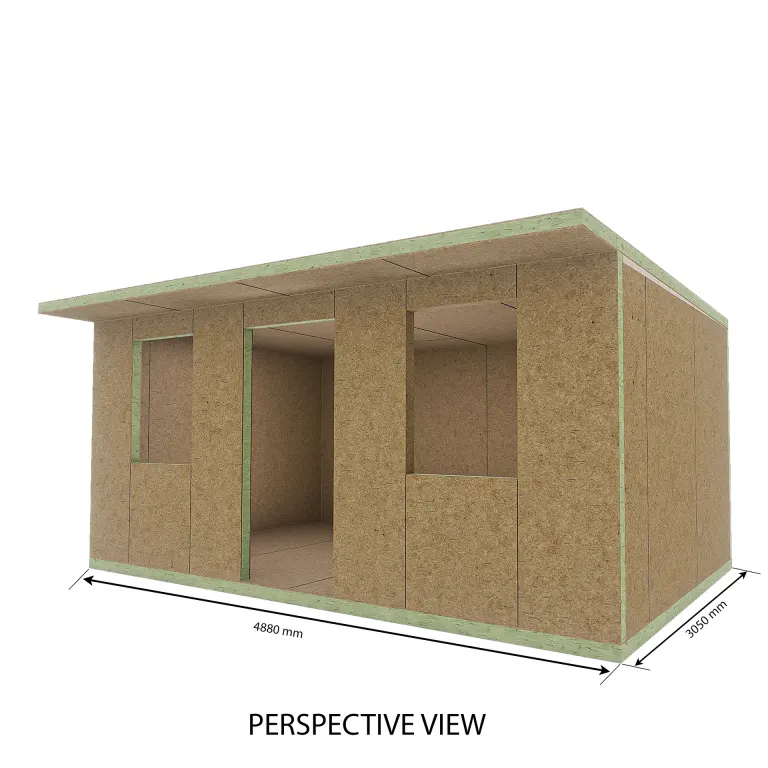
- Bespoke dimensions — any model can be adjusted in size to suit your garden, your layout and your intended use.
- Door and window positions can be adjusted to your requirements.
- Your choice of finishes — you choose the internal and external finishes, from cladding and roofing to flooring and interior walls.
Optional extras such as UK-wide delivery, professional installation, an EPDM roof kit and ground screw foundations are available at additional cost. Browse our SIP garden room kits to compare sizes and prices.
14 Ways to Use a SIP Garden Room
- Home Office
- Home Gym
- Garden Bar
- Games Room
- Cinema Room
- Golf Simulator Room
- Children's Playroom
- Teenager's Den
- Hobby / Craft Room
- Workshop
- Treatment / Beauty Room
- Pool House
- Garden Studio
- Garden Storage / Bike Room
1. Home Office
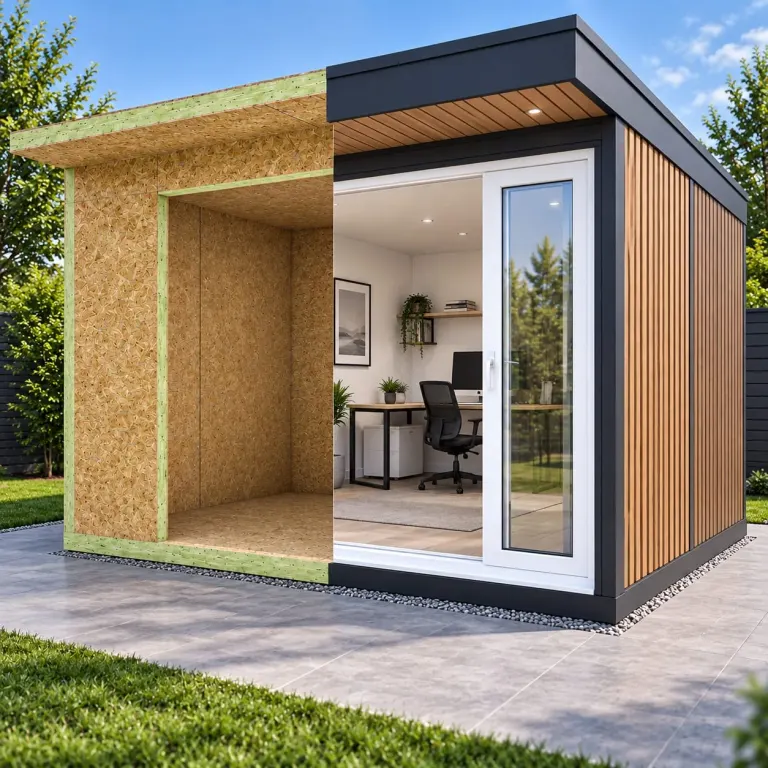
The most popular use of all — and for good reason. A garden office gives you a proper place to work, away from the noise of the house, and a short walk down the garden that separates work from home life.
SIP walls, floor and roof give the room a solid, well-insulated structure, which helps keep it comfortable through the seasons. Position the door and windows to bring in daylight without glare on your screen, and plan sockets and data points before the internal finishes go on.
2. Home Gym
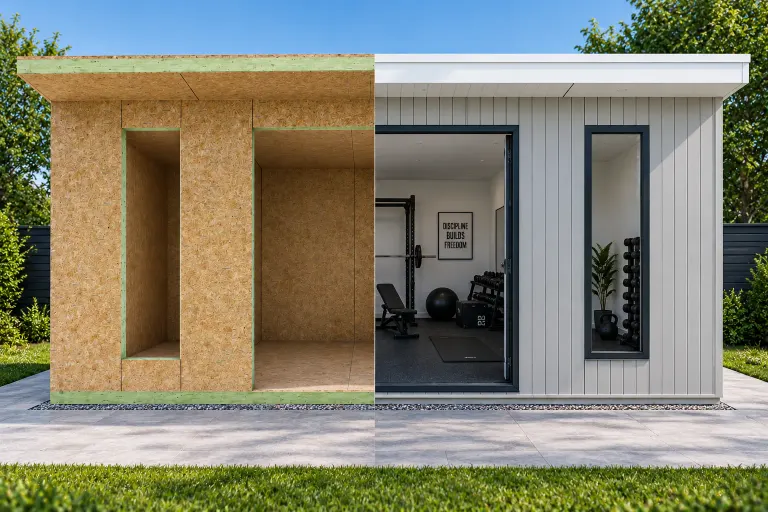
Skip the drive to the gym and train at the end of the garden instead. A home gym needs floor space, ceiling height and good ventilation, so think about all three when choosing your model and dimensions.
Plan a wide door if you are bringing in a rack or cardio machines, lay rubber gym flooring over the SIP floor, and keep one solid wall free for mirrors. For heavy equipment, ask us about the floor and foundation specification for your layout.
3. Garden Bar
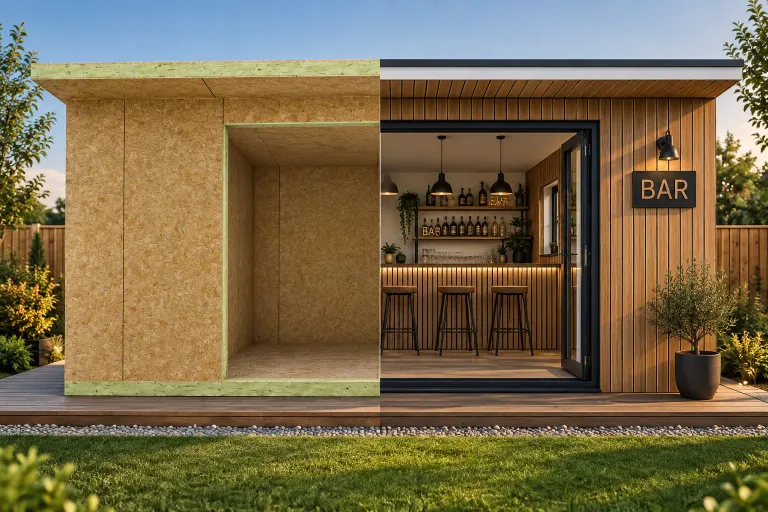
A garden bar turns summer evenings — and winter ones — into an occasion. Wide glazed doors opening onto a patio or deck work well, with a bar counter along the back wall and space for stools.
Because the internal and external finishes are your choice, the style is up to you: a sleek modern cocktail bar, a rustic pub-style snug or anything in between. Plan the electrics early for fridges, lighting and music.
4. Games Room
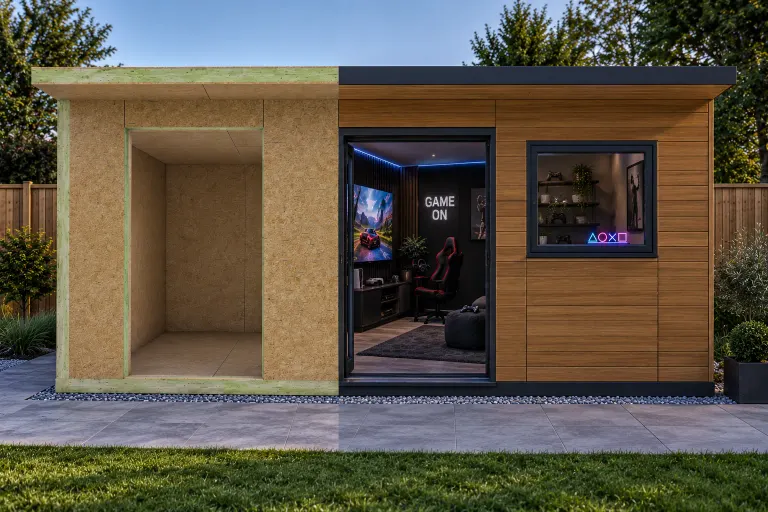
Pool, table tennis, darts or a console setup — a games room keeps the fun (and the noise) out of the main house.
Check the space you need around a pool or table tennis table, because cue and play space matter as much as the table itself, then choose a model or bespoke dimensions to match. Walls without windows leave room for dartboards, shelves and screens.
5. Cinema Room
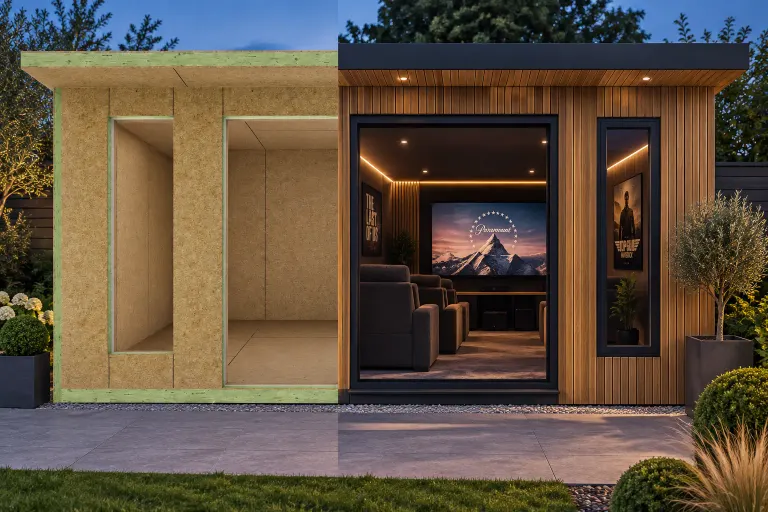
A dedicated cinema room is hard to fit into most houses, but easy to create in the garden. You can keep glazing to a minimum to control light and plan the screen wall and seating rows from the start.
Finish the inside with dark surfaces, blackout blinds and acoustic panels, and plan cable routes for the projector, speakers and screen before the internal walls are finished.
6. Golf Simulator Room
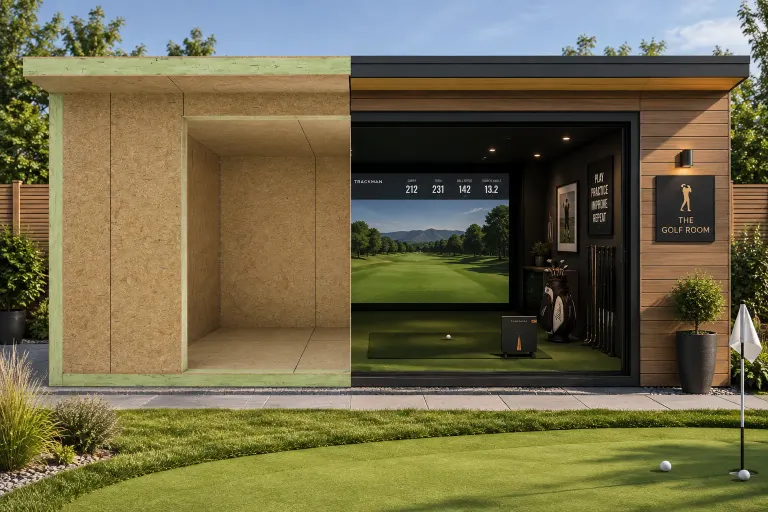
A golf simulator needs space in every direction: width for your swing, depth between you and the screen, and enough ceiling height to swing a driver safely. That makes a garden room an ideal home for one, as long as the dimensions are right.
Check the room size your simulator manufacturer recommends, then choose a model or ask us for bespoke dimensions and panel heights. Our Garden Room 9 is shown here finished as a golf room.
7. Children's Playroom
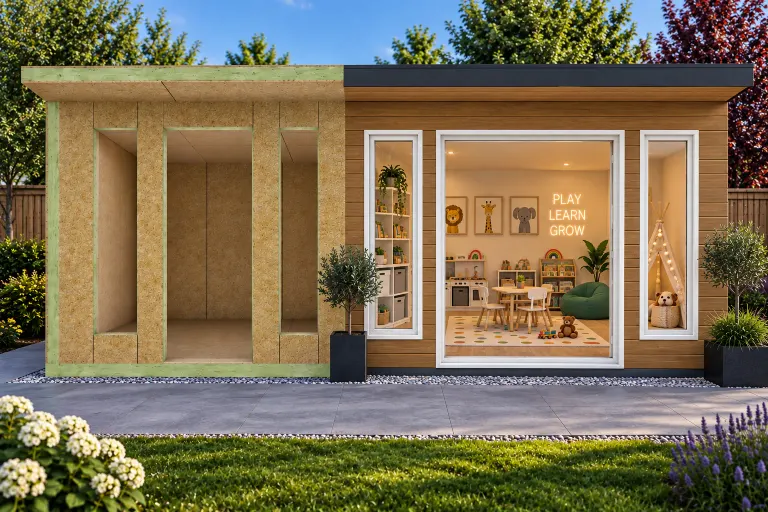
Give the children their own space and get your living room back. A garden playroom can hold toys, books, a craft table and a reading corner, with large windows so you can see in from the house.
Choose durable, easy-clean internal finishes, soft flooring and low-level storage. As the children grow, the same room can become a homework space, a den or a hobby room.
8. Teenager's Den
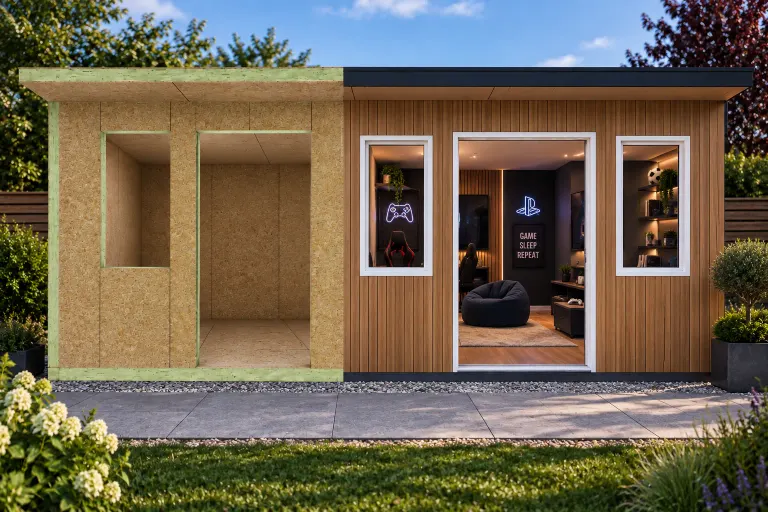
Teenagers want independence and parents want them close by. A garden den gives them a place to game, study, play music and spend time with friends without taking over the house.
Plan plenty of sockets, good lighting and a layout that works for a desk, a sofa and a screen. If the den will ever be used for sleeping, check the planning and Building Regulations requirements first (see below).
9. Hobby / Craft Room
Sewing, painting, model-making, pottery, music practice — hobbies take up space, and they are far more enjoyable when you do not have to pack everything away at the end of the day. A garden hobby room lets you leave projects out and keep materials organised.
Good natural light matters for detailed work, so think carefully about window positions. Add a sink, extra ventilation or dedicated storage if your hobby needs them.
10. Workshop
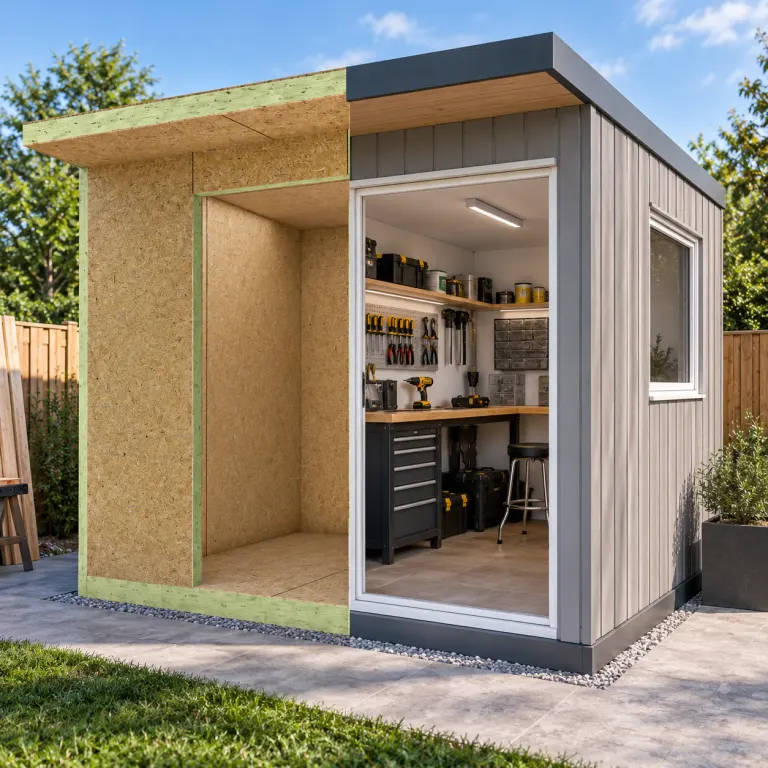
A garden workshop is the place for woodworking, DIY, bike maintenance and repairs, with room for a workbench, a tool wall and storage.
Even a compact footprint such as our 2.44m × 2.44m Garden Room 6 can make a practical workshop. Choose hard-wearing internal finishes, plan power for your tools, and think about the door width you will need to bring in timber and larger projects.
11. Treatment / Beauty Room
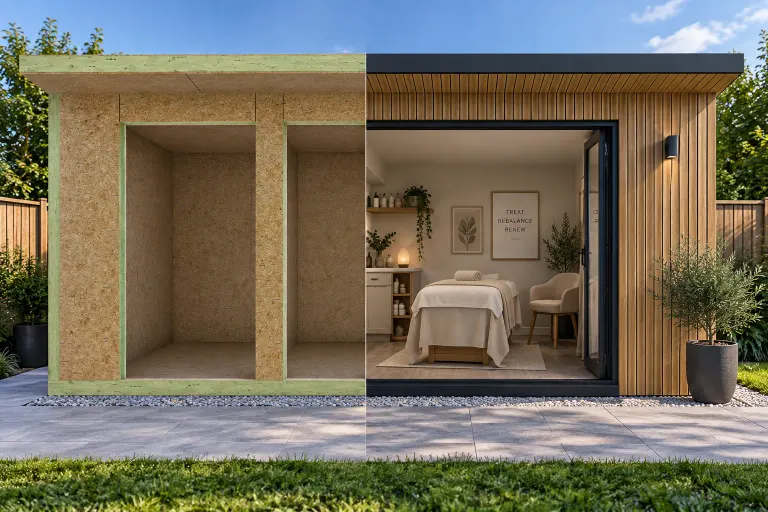
For therapists, beauticians and hairdressers who work from home, a garden treatment room provides a professional, private space that is separate from family life.
Allow space for a treatment couch or chair with room to move around it, a small storage or wash area, and a calm interior finish. If clients will be visiting, check with your local planning authority whether planning permission is needed for business use.
12. Pool House
If you have a swimming pool or hot tub, a pool house gives you somewhere to change, store towels and equipment, and relax out of the sun. Large glazed doors facing the pool keep the space connected to the outdoors.
Pool areas can be humid, so plan ventilation from the start and choose moisture-resistant internal finishes. Pool plant and equipment can be housed in a separate section of the building.
13. Garden Studio
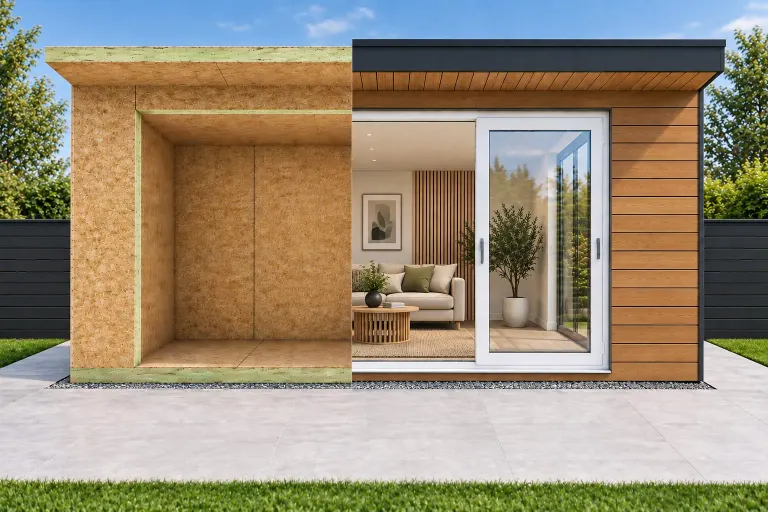
Artists, photographers, musicians, podcasters and content creators all benefit from a dedicated studio. A garden studio gives you a quiet, private creative space that you can shape around the way you work.
Think north-facing windows for steady light, plain walls for backdrops, or a small, well-finished room with acoustic treatment for recording. With bespoke dimensions and adjustable door and window positions, the layout can be designed around your work.
14. Garden Storage / Bike Room
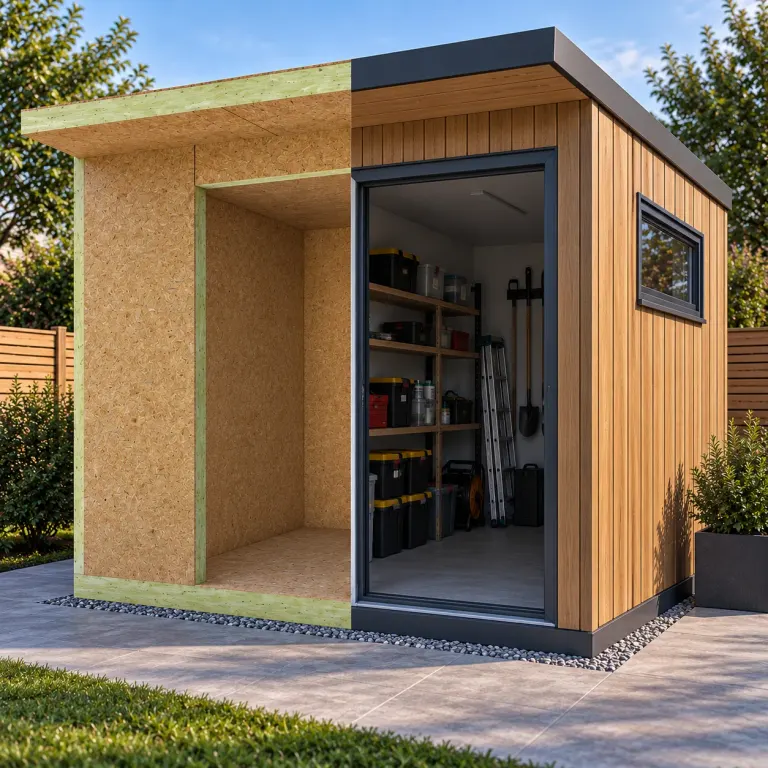
Not every garden room has to be a living space. A SIP building also makes a sturdy, dry place to keep bikes, garden tools, outdoor furniture and equipment — a real step up from a typical shed.
Add wall-mounted bike racks and shelving, lighting and a lockable door, or combine storage with a small workshop area. Compact models such as Garden Room 6 and Garden Room 7 work well for this.
Do You Need Planning Permission?
Many garden rooms can fall under permitted development, but it depends on the size, height and position of the building and on how you intend to use it. Uses such as sleeping accommodation, or running a business that clients visit, may need planning permission, and some uses also need to meet Building Regulations. We recommend checking with your local planning authority before you order.