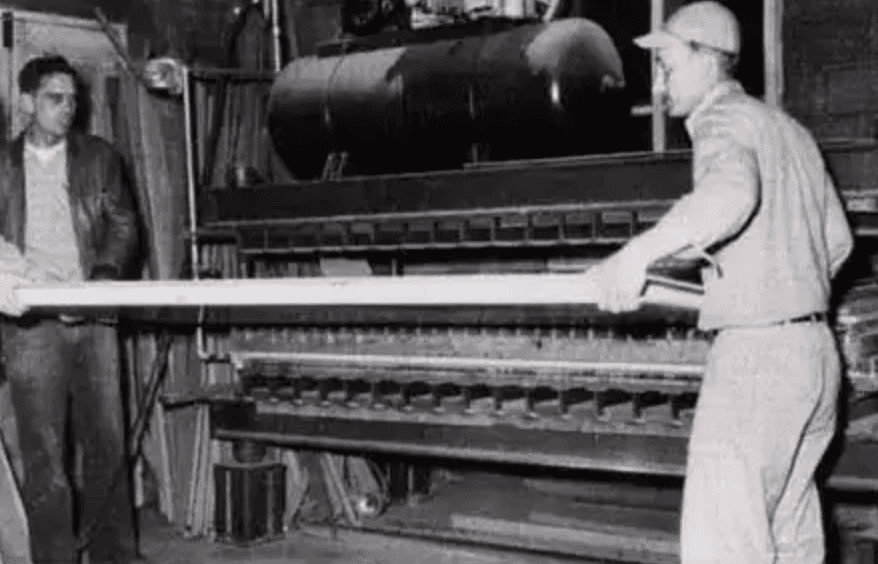
The history of structural insulated panels (SIP) began in the middle of the 20th century and is an example of innovation in the construction industry. The idea of creating multilayer panels combining load-bearing capacity and thermal insulation properties was first realised in the USA. Since then, SIP technology has travelled a long way of development and improvement.
The first SIP samples were developed in the 1930s, but they became widespread after the Second World War due to the need for fast and economical construction. In the 1950s, mass production of SIPs began in the US and they were used to construct homes, schools and other buildings.
One of the key milestones in the development of SIP technologies was the introduction of new materials and manufacturing processes. In particular, the use of polyurethane and polystyrene as an insulating layer made it possible to significantly improve the thermal insulation properties of the panels.
Modern SIPs are characterised by high durability, energy efficiency and environmental friendliness. They are used in various climatic conditions all over the world, demonstrating their efficiency in both private and commercial construction.
The history of SIP technologies is a story of innovation to improve the quality of construction and the comfort of living. These technologies continue to evolve, adapting to new requirements and challenges of the present day.
Evolving Construction: The Historical Development of SIP Technology